
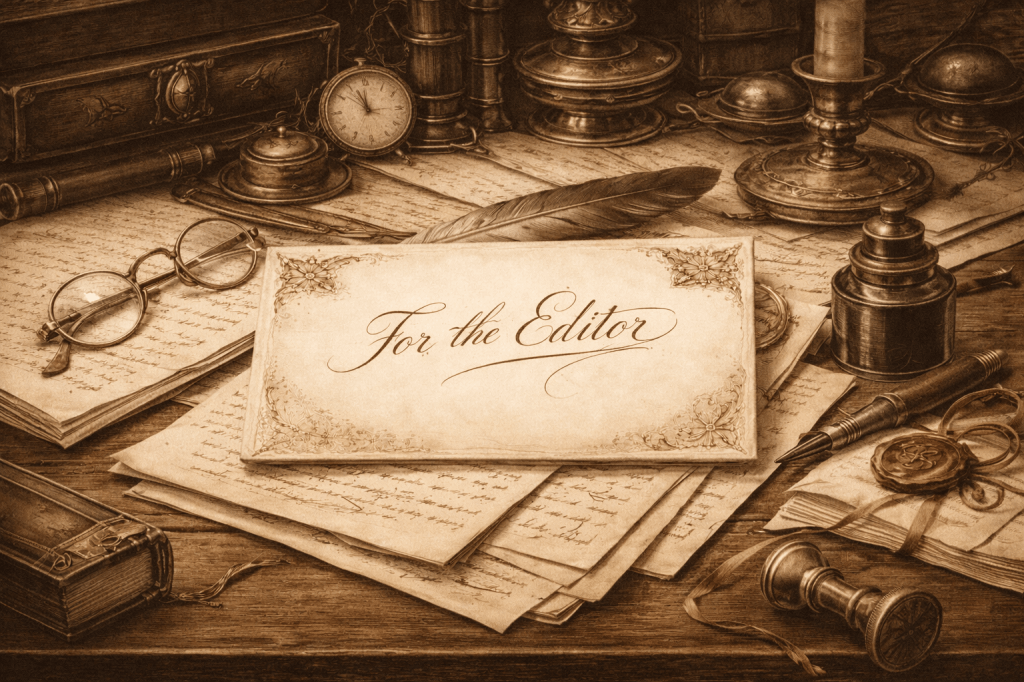
Dear Editor (or whoever will be charged to read this),
Please do not discard this letter thinking it’s false. This is not a plea for help or a confession. It is purely to correct the information that is being falsified by this newspaper.
Your statements:
The poisoning cannot be attributed to a single person. These horrendous tasks must be the work of at least two men.
FALSE
The poisons used can be purchased at any pharmacy or drugist. This makes anyone a danger as well as a suspect.
FALSE on both counts.
It has been suggested that poison murders tend to be done by women. We of this newspaper feel that this is an undertaking that only men will be complicit in.
FALSE
With each news article that I read, I begin to wonder what level of incompetence your reporters are at. Do they actually attempt to research the types of people who could be successfully achieving such levels of deceit, cleverness, and skill in poisoning strangers?
Do not feed people’s curiosity with hearsay. You are making fools of yourselves, and the further along this road you go, the more idiotic you will be in the eyes of your readers.
If you want to find out who’s actually committing the poisonings, do your research. Follow the trails of the clever constables and inspectors of your local constabulary. Talk to the local medical examiner. They might not have the answers yet, but they have the clues.
Yours, Disappointed
An assistant stood in the doorway of the editor’s office, his hand outstretched and shaking. It was the sound of the paper rattling that caught the attention of the editor, Gerald Harcroft.
Without raising his head, he spat out, “Just leave it on my desk.”
“Oh, sir?”
“WHAT!” Gerald Harcroft shouted as he pushed his chair back, about to stand up.
“Sir, I believe this is important. I don’t want it to get lost on your desk.”
“Lost on my desk! What kind of fool do you think I am? The editor leaned forward and aggressively pulled the paper from the assistant’s hand.
Gerald Harcroft read what was on the paper, turned it over, turned it back, and read it again.
“Sir, should I go for a constable?”
“Now, why would we do that?”
“This, this could be the murderer.”
“And what of it? This also might be some quack. We need to find out if this is authentic or not.”
“But…”
“But… what?”
The assistant had been working for the newspaper long enough to know when it was time to shut up. He backed up a few steps, bumping into the door jamb, then turned and quickly walked back to his desk. He also knew that it was something he needed to keep quiet.
Within seconds of the assistant leaving the office, the editor hollered out for two men to attend him. When they entered his office, they quietly shut the door. From that point on, something began to stir in the newspaper office. A hushed meeting between the editor and two of his reporters. These reporters were the most active in the story.
—
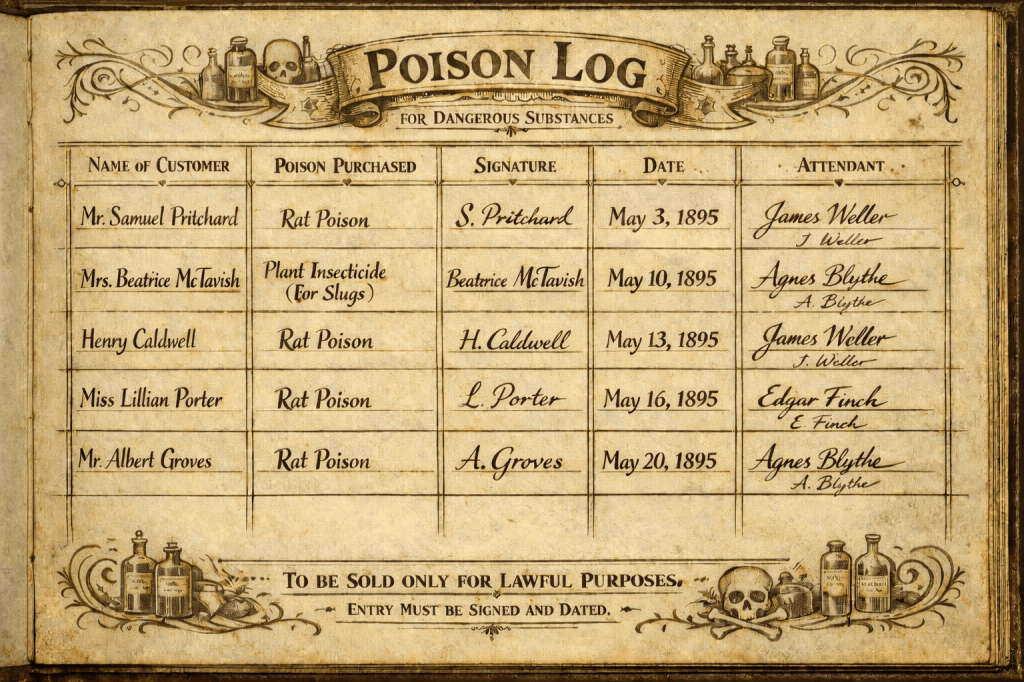
Constable Richards rushed towards the Sergeant’s desk, out of breath. He asked where the Inspector was. The Inspector had been within earshot and turned to acknowledge the Constable. The Constable quickly walked over to him and presented him with a logbook.
“Inspector, sir, I brought this to you immediately for your attention. You need to see what’s in here.”
The Constable opened the book and pointed to something on one of the pages. This here, sir, if it gets out, it’s not going to look good for you. The Inspector closed the book and motioned for the Constable to follow him into his office.
“Where did you find this book?”
“It was at drugist McCarthy’s. We looked at this book before, but at the time, we were not considering any women’s names.”
Well, you should have been. Women do tend to be the ones who poison.”
“The name. What are we going to do about this?”
“Well, I’m certainly not going to hide this evidence. I wouldn’t be doing my job properly if I did, would I?”
“But sir…”
“No buts. You know what to do.”
“Are you sure, Inspector?”
“You know what to do.”
“Yes, sir,” said the Constable in a low voice.
As the constable exited the inspector’s office, the desk sergeant entered. “Sir, this letter was left at the desk for you.”
“When?”
“Just now. A delivery boy brought it in.”
The inspector opened the envelope and carefully removed the letter within. It was written on a piece of paper that looked familiar. In the past few weeks, all the intel that they had received concerning what the newspaper was up to had come on this parchment. The Inspector unfolded the paper and read it. It was only a few simple lines.
We’ve received some evidence. The editor is trying to keep it hush. You may wish to pay him a visit.
The inspector folded the paper and inserted it into his jacket pocket. He grabbed his hat, put it on, and walked out to the desk sergeant’s area. He let him know that he would be leaving for the newspaper office if anyone needed him. Before he could, another constable alerted him to a break-in at the morgue. The Inspector knew that the newspaper would need to wait.
 The ghoulish gourmet!
Leave a comment